Showing posts with label rwanda. Show all posts
Put Them on the Endangered Species List
Posted by
Go Vols
on Tuesday, July 5, 2011
Labels:
big buck safari,
rwanda
/
Comments: (0)
Africa & Coffee Articles VI
Africa:
- International Tanganyika Grade 4 Blog - Lucy's work blog has just been discovered! It covers all four sections of Grade 4, but Lucy's posts are by far the bests (her class is 4-BL). Check out the most recent post on the kids' newspaper articles on speakers that came in to tell them about Tanzania. Unfortunately, I was unable to present on the Tanzanian coffee industry since I was out of town but our roommate Jacie stepped in to talk to the kids (Seems none of Lucy's kids wrote on coffee but there are some stories here).
- Huffington Post: From Rwanda to Libya: Who's Calling Whom a Cockroach Now? (3/1/11) - The documentary on the Rwandan Genocide cited in this article (Coexist) is not on Netflix but certainly sounds interesting.
- The East African: Dar on Brink of Darkness as Power Crisis Deepens (2/28/11) - The power cuts have been quite bad since it hasn't really rained in about four months. Thankfully we have a generator that runs our refrigerator, fans, and lights (but not our stove or A/C). Two weeks ago we did get a gas hotplate so we have been able to use it to cook when the power is out.
- WSJ: Danish Sailboat Hijacked in Indian Ocean (2/28/11) - Pirates are now interested in civilian leisure sailboats, not just big tankers.
- WSJ: Ivory Coast Lurches Toward Civil War (2/25/11) - Pretty wild that this has gone on for three months with no real end in sight.
- NYTimes: New Violence as Strongman of Ivory Coast Fights Ouster (2/23/11) - Ivory Coast was front and center on the news for a while but with Tunisia, Egypt, Bahrain, and Libya stirring the pot the news doesn't seem to care about Ivory Coast anymore. Well, the incumbent President, who seems to have lost the election but won't turn over power, is still around and the guy who won continues to run a second government out of a hotel. Anyway....it is still going on and eventually it will affect everyone as the prices Snickers and Green & Blacks
are going to increase as cocoa prices continue to skyrocket (Ivory Coast is the world's largest cocoa producer).
- WSJ: Pirate Attack Force Leisure Sailors to Change Course (2/23/11) - Pirates are really not messing around.
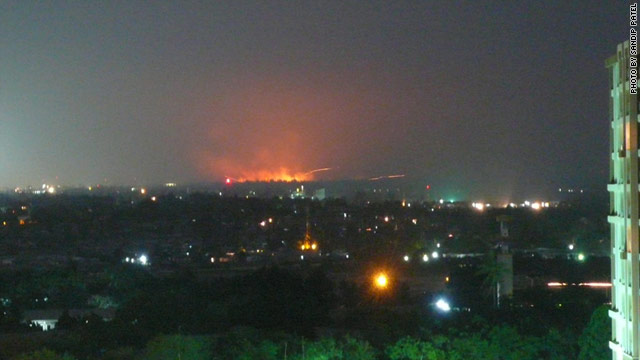
- BBC: Tanzania Blasts: At Least 20 Dead in Dar es Salaam (2/17/11) - These explosions noticeably shook our house even though we are about 10 miles from the airport. The neighborhood where the munitions depot is located would definitely termed low income and was largely wiped out, leaving people homeless and pretty devastated. There have been blood and clothes drives on going since the explosions. The picture below was likely taken from an apartment building near our house and made it all the way to CNN (CNN: Explosions at Munitions Depot Rock District Near Dar es Salaam Airport).
Rwanda Coffee Now on Sale in the U.S.
The 2010 coffee crop from Rwanda is now on sale and two of the roasters have called out TechnoServe in their marketing efforts.
- Intelligentsia Coffee: Zirikana, Rwanda: Kirezi - Intelligentsia is a high-end coffee roaster that has bought a significant amount of coffee from TechnoServe cooperatives in Rwanda. The Kirezi cooperative that is highlighted in the coffee's "story" is a new group that received a ~$13K loan to finance a washing station because of the work that I am doing here.
- Peet's Coffee and Tea: Uzuri African Blend - Peet's has been a key buyer of TechnoServe coffee in East Africa for many years and views the Coffee Initiative as a valuable partner in Rwanda and Tanzania. This year's Uzuri blend has been released and the reviews are pretty solid (check at the bottom of the first link above). The page above also includes links to a slideshow with another TechnoServe cooperative Abangakarushwa and a video that I've included below. The employees in the slideshow that do the sorting and drying at coffee wet mills in Rwanda make 500 Rwandan Francs a day (~$0.84), a very good wage in rural areas where cash wages are virtually non-existent.
Africa & Coffee Articles V
Another installment of things that interest me!
Africa:
Africa:
- NYTimes: In the Footsteps of the Museum's Gorillas (11/21/10) - Lucy found this interesting article linking the American Museum of Natrual History in New York to the Virunga Mountains in East Africa. Apparently the scenes in the Hall of African Mammals are depictions of actual places from the 1920s and a curator from the museum is returning to the site where the gorillas scene originated. Below is a picture from one of our visits to the Virungas last year with the same mountains from the museum behind us.
- NYTimes: When Donations Go Astray (11/20/10) - Not a new thing but everyone should check how efficient charity organizations are before donating.
- NYTimes: Lost Boys of Sudan Fill in the Blanks of Their Past (11/20/10) - 20 years later resettled Sundanese find a link to their former lives.
- WSJ: Banks Exit From Embassy Business (11/20/10) - Embassy banking is big business in Africa with so much aid money needing a home until it can be spent (or siphoned off to the government!). Apparently in the U.S., the banking regulations have gotten so hairy with anti-money laundering rules that major banks are just walking away from embassy business.
- WSJ: Putting Cap on Bad Juju Conjures Up a Good Business (11/19/10) - Welcome to Africa! You should read this article if you want to begin to understand how challenging it is to get things done here. Also, the effects of this ride on Lucy's juju are currently unknown (but her driver is ready for the long winter!).
Africa & Coffee Articles IV
The latest installment of things relevant to our lives in Africa (sort of):
- WSJ: African Brand Is Sweet on Obama (10/7/10) - Obama is all over Africa ("First Kenyan to be President of the United States"). The possibility of products with Obama are endless here. Lucy has a lovely apron with Obama's face on it and had to stop me from buying these fashionable britches.
- WSJ: Troops Pledged to Somalia (10/7/10) - Uganda will provide the physical bodies if someone else pays. Museveni has been President of Uganda for 24 years and was able to remove any mention of term limits from the constitution in 2006.
- WSJ: Catching Africa's Investment Bug Is Proving Contagious (10/6/10) - Yes, limited competition results in healthy margins, but can volatile exchange rates, corruption, political instability, and an unskilled labor force be overcome? Cellular providers and breweries print money in Africa, but can other industries?
- WSJ: When Togo Played Bahrain, the Whole Match Was a Fake (10/4/10) - Bahrain paid to fly the Togo national team to Bahrain for an exhibition match. A team came but it wasn't the national team. This story probably sounds ridiculous to Americans but doesn't seem odd to me after living in Africa. The pictures below were taking soccer games in Kigali. The national stadium was a ten-minute walk from our house.
- NYTimes: Frenzy of Rape in Congo Revails U.N. Weakness (10/3/10) - The stories that continue to come out of Congo are hard to imagine and quite disturbing. This article reinforces what seems to status quo when it comes to the U.N. providing peacekeepers. The video below shows the landscape of the area which is very similar to Rwanda.
2nd Avenue Construction in New York
So I wrote in April about what could have been my apartment in New York at 91st and 2nd Avenue (VolunteerExpat: Upper East Side Rat Infestation) and another article came out yesterday about the effects of the 2nd Avenue subway construction on local businesses (NYTimes: Subway Work on 2nd Avenue Hobbles Stores). The picture included in the Times (below) actually shows what would have been my apartment (the row of windows on the second right above the word "Cottage").
Who knew I'd be moving soon enough to a dirt road in Rwanda...
Running with the Hash House Harriers
After Lucy's marathon a few years ago in San Diego (below), we have enjoyed running together a bit more when we get around to it.
One motivation to run is the Hash House Harriers, a running/social group with chapters in 1,251 cities in 183 countries. We started participating this spring in Kigali and have participated in the Dar es Salaam "hash" every Monday night since we arrived. There is typically a 35-55 minute run with the group (~50 people) meeting up along the way for "beer stops" and concluding at someone's house for supper and additional socializing. Over the past few weeks we have made a few friends and Lucy even has two of her parents who regularly participate.
So far the first three weeks have all been on the Msasani Peninsula (where we and many expats live...see map on the right side of the blog of relevant spots in Tanzania), which is quite flat, but hypothetically the runs could take place anywhere someone wanted to plan a trail. Most of the running has been east-west on dirt roads with connections on north-south paved roads, though it is quite circuitous in reality and would be quite easy to get lost given how every spot looks pretty much the same. The Dar hash is quite a contrast to Kigali where many of the participants were Rwandan and we were running up and down swampy valleys around mud brick houses and through people's fields and cow pastures.
There are a few major runs each year spread around Tanzania (where fetching t-shirts are given out) and also regional (some recently returned from one in Addis Ababa, Ethiopia) and international hashes (last year people from Rwanda went to Malaysia). In two weeks is the 1,400 Dar hash so there is a weekend excursion involved where the group will travel to a house on south beach. We may attend if our schedule permits.
On a related note, a couple of interesting articles on running that Rawson found on NPR:
One motivation to run is the Hash House Harriers, a running/social group with chapters in 1,251 cities in 183 countries. We started participating this spring in Kigali and have participated in the Dar es Salaam "hash" every Monday night since we arrived. There is typically a 35-55 minute run with the group (~50 people) meeting up along the way for "beer stops" and concluding at someone's house for supper and additional socializing. Over the past few weeks we have made a few friends and Lucy even has two of her parents who regularly participate.
So far the first three weeks have all been on the Msasani Peninsula (where we and many expats live...see map on the right side of the blog of relevant spots in Tanzania), which is quite flat, but hypothetically the runs could take place anywhere someone wanted to plan a trail. Most of the running has been east-west on dirt roads with connections on north-south paved roads, though it is quite circuitous in reality and would be quite easy to get lost given how every spot looks pretty much the same. The Dar hash is quite a contrast to Kigali where many of the participants were Rwandan and we were running up and down swampy valleys around mud brick houses and through people's fields and cow pastures.
There are a few major runs each year spread around Tanzania (where fetching t-shirts are given out) and also regional (some recently returned from one in Addis Ababa, Ethiopia) and international hashes (last year people from Rwanda went to Malaysia). In two weeks is the 1,400 Dar hash so there is a weekend excursion involved where the group will travel to a house on south beach. We may attend if our schedule permits.
On a related note, a couple of interesting articles on running that Rawson found on NPR:
Africa & Coffee Articles III
Latest installment of articles relevant to our lives in Africa:
- Rwanda New Times: School Girls Held Over Marijuana (9/9/10) - This hard hitting news in the Rwandan national newspaper is too good to pass up: "In a bizarre turn of events, Salim Sintukamazina, a man Police had always suspected of dealing in the drug was shot dead after Police stormed his house following a tip off from an informer on Tuesday night." Umm...not sure how bizarre it is?
- WSJ: New Malaria Drug Candidate Holds Promise (9/3/10) - Malaria is bad. We are now taking malaria medication everyday.
- NYTimes: In Somali Civil War, Both Sides Embrace Pirates (9/1/10) - Just up the coast from us, pirates and al Shabab join forces to leverage each others talents.
- NYTimes: Rwanda Threatens to Pull Peacekeepers From Darfur (8/31/10) - The Rwandan government doesn't like being implicated in the violence in Congo. Perhaps things in Rwanda aren't as rosy as it appears from the outside?
- WSJ: Sudan's President Stirs Rift in Kenya (8/28/10) - African leaders stand united in the signing of Kenya's new constitution, even though some have outstanding warrants from the International Criminal Court. Sundanese President Omar al-Bashir did not attend Paul Kagame's inauguration on Monday with Rick Warren, who apparently is Rwandan now.
- NYTimes: U.N. Congo Report Offers New View on Genocide (8/27/10) - Obviously there have been and continue to be a lot of bad things going on in Congo, but is the Rwandan government involved? Friends in Kigali seem to have mixed feelings, given that the research may not be top notch.
- WSJ: Germany Charges Ex-Rwanda Mayor With Genocide (8/18/10) - These types of situations have been coming up with more and more frequency as Rwanda gets more global attention for progress. Odd how the estimates on the number of people killed in the genocide very so. This one says "At least 500,000" and most would put it at twice that.
- WSJ: Kagame Wins Rwandan Election in Landslide (8/10/10): Kagame carried 90% of the vote with no competition.
- WSJ: Naomi Campbell and the 'Blood Diamond' Hoax (8/10/10) - Interesting opinion piece on the reality of blood diamonds.
- NYTimes: Doubts Rise in Rwanda as Election Is Held (8/8/10): Benevolent dictator? All of these articles on the Rwandan election have excellent background on the country as a whole.
- WSJ: Opposition Parties Cowed in Rwandan Election (8/7/10) - With the main opposition being disqualified from the election or jailed, Paul Kagame is likely to be re-elected President.
- NYTimes: Kenyans Approve New Constitution (8/5/10) - A new Kenyan constitution passed with 67% of the votes following traditional tribal lines.
- WSJ: Kenayans to Vote on Controversial Constitution (8/2/10) - With quite a bit of U.S. influence, Kenya put a reworked constitution to vote.
- WSJ: A Journey Through the Jungle (7/24/10) - Jane Goodall reflects on the last 50 years that she has studied and lived with chimps in western Tanzania.
- NYTimes: Obama's Overdue AIDS Bill (7/20/10) - Desmond Tutu puts the onus on the U.S. to keep increasing its funding to treat those in Africa with AIDS.
- NYTimes: Rwanda Opposition Figure Found Dead (7/14/10) - With the Presidential election coming on August 9, more and more stories like this one are coming out where opposition voices have been killed or jailed.
- Washington Post: Rwanda's Ex-U.N. Ambassador, Who Vanished After Genocide Resurfaces in Alabama (4/4/10) - Just found this really interesting article on Rwanda's representative to the U.N. Security Council during the genocide.
Coffee:
- WSJ: Is It Time to Start Hoarding Coffee Beans? (9/8/10) - I regularly read the ROI column in the WSJ anyway and this weeks happens to be on the soaring price of green coffee. Probably not a real investment opportunity for the casual investor (and most of the upside has likely been missed), but the volatility in coffee prices is just another factor that has to be dealt with by the Coffee Initiative.
- WSJ: Coffee Futures Are Near a 13-Year High (8/30/10) - I think in the last few days this high has been blown away. High prices are sometimes good and sometimes bad for the Coffee Initiatives cooperatives.
- WSJ: Nestle Plans Ground Attack Over Coffee Beans (8/26/10) - Roasters (like Starbucks and Nestle) are doing more and more to solidify their coffee supply chain, especially as prices continue to skyrocket. Some of the concepts described in this article are similar to what the TechnoServe Coffee Initiative does in East Africa.
- NYTimes: A Coffee Conundrum (8/3/10) - Green Mountain Coffee generates more than 80% of its revenue from its single-use K-Cups (it has a virtual global monopoly). It is exploring how to make these K-Cups more eco-friendly.
This is ripe coffee cherry at a TNS cooperative in southwestern Rwanda right before it goes into the wet mill (aka "pulper").
Successful Return to Africa
After spending an incredible summer in the U.S. visiting friends and family, Lucy and I left New York at 6:30pm on September 1st for our 30 hour return trip to Africa. Between our reunions, weddings, and book stamping adventures this summer, we had accumulated quite a bit of stuff to take back with us including a home theater projector, camera, 5lbs bag of chocolate chips, and two canisters of garlic salt, among other things. We successfully packed all of the stuff going back with us into three checked bags (we had six last year) and four carry-ons.
We landed in Amsterdam at 8:00am local time on September 2nd with a layover just long enough to buy a reasonable supply of duty free cheese (remember: no cheese in Africa), pastries, and chocolate and take in a riveting art collection from the Rijksmuseum on Dutch Cows.
In Amsterdam we went our separate ways with Lucy flying straight to Dar es Salaam, Tanzania (our new home) and me flying to Nairobi and on to Kigali to pick up our stuff that we had left there. Lucy arrived at 10:30pm local time on September 2nd and settled in at the Swiss Garden Hotel, a bed and breakfast where she had stayed when she first arrived in Dar in January 2006. I arrived in Kigali at 2:10am local time on September 3rd and am staying at a friend's house where I am staying until I head to Dar sometime this week.
All in all, a stress free trip back, minus almost missing our flight out of New York (who knew it took two hours to get to JFK on a Wednesday afternoon!). Once again KLM was a pleasure to fly with good food, free drinks, and plenty of entertainment (I watched six movies, Lucy slept). They also seem to love America!
Today is I think what is known as a Lazy Sunday and I am catching up on email and other things I have been meaning to do. Since arriving in Kigali, I have met up with a handful of friends, checked in at the Technoserve office, ran with the Kigali Hash House Harriers, and gone to see our seamstresses at Kimironko (they hemmed all my new pants and fixed all my old ones that were ripping for ~$8.00), among other things.
Tomorrow is the Presidential Inauguration in the National Stadium right by our house so that means the whole country will be shut down and people will be celebrating in the streets. Apparently it hasn't rained since we left but there was a bit of a downpour today so the short rains must be starting.
We landed in Amsterdam at 8:00am local time on September 2nd with a layover just long enough to buy a reasonable supply of duty free cheese (remember: no cheese in Africa), pastries, and chocolate and take in a riveting art collection from the Rijksmuseum on Dutch Cows.
In Amsterdam we went our separate ways with Lucy flying straight to Dar es Salaam, Tanzania (our new home) and me flying to Nairobi and on to Kigali to pick up our stuff that we had left there. Lucy arrived at 10:30pm local time on September 2nd and settled in at the Swiss Garden Hotel, a bed and breakfast where she had stayed when she first arrived in Dar in January 2006. I arrived in Kigali at 2:10am local time on September 3rd and am staying at a friend's house where I am staying until I head to Dar sometime this week.
All in all, a stress free trip back, minus almost missing our flight out of New York (who knew it took two hours to get to JFK on a Wednesday afternoon!). Once again KLM was a pleasure to fly with good food, free drinks, and plenty of entertainment (I watched six movies, Lucy slept). They also seem to love America!
Today is I think what is known as a Lazy Sunday and I am catching up on email and other things I have been meaning to do. Since arriving in Kigali, I have met up with a handful of friends, checked in at the Technoserve office, ran with the Kigali Hash House Harriers, and gone to see our seamstresses at Kimironko (they hemmed all my new pants and fixed all my old ones that were ripping for ~$8.00), among other things.
Tomorrow is the Presidential Inauguration in the National Stadium right by our house so that means the whole country will be shut down and people will be celebrating in the streets. Apparently it hasn't rained since we left but there was a bit of a downpour today so the short rains must be starting.
Homosexuality in Africa
Homosexuality is obviously a hot topic around the world, and East Africa is certainly no different. Many countries in Africa have considered or are considering criminalizing homosexuality in some way and some go so far as to include the death penalty as punishment.
Obviously, the fact that this type of ideology can make it this far in the legislative process is quite scary. If you are interested in some of the broader influences on the topic in Africa, you should definitely read The U.S. Christian Right and the Attack on Gays in Africa.
The legislation failed in Rwanda but it remains a topic across the region:
Obviously, the fact that this type of ideology can make it this far in the legislative process is quite scary. If you are interested in some of the broader influences on the topic in Africa, you should definitely read The U.S. Christian Right and the Attack on Gays in Africa.
The legislation failed in Rwanda but it remains a topic across the region:
More Interesting Africa and Coffee Articles
Posted by
Go Vols
on Friday, July 23, 2010
Labels:
coffee,
development,
rwanda,
travel
/
Comments: (0)
The second installment of interesting articles that help explain some of the issues in Africa:
- NYTimes: Somali Refugees Fear Loss of Ugandan Haven (7/21/10) - After the explosions in Kampala during the World Cup Final, Uganda has dramatically altered its asylum protocol.
- WSJ: In Crisis, Foreigners Turn to $100 Bill (7/20/10) - $100 bills (post-2004 Series) are certainly the currency of choice in East Africa.
- WSJ: Global AIDS Fight Shifts Toward Prevention (7/17/10) - More discussion about which is a more effective form of healthcare aid: prevention or treatment.
- NYTimes: Tricked, Rwandan Refugees Are Driven Home, U.N. Says (7/16/10) - Rwandan refugees in southern Uganda are being forced to repatriate through deception.
- NYTimes: Our New Life, in Blood and Color (7/16/10) - Thoughtful opinion piece on the aftermath of the bombings in Kampala.
- WSJ: Militants Find Symbolic Targets in Uganda (7/13/10) - We have traveled to Kampala twice (See map of places we have been) and the recent terrorist attacks there have reminded people how unstable things still are in East Africa.
- NYTimes: Islamists Claim Attack in Uganda (7/12/10) - Many people heard about the attacks in Kampala during the World Cup finals.
- NYTimes: For Final, South Africans Put Past Aside (7/10/10) - As former colonial masters, the Dutch were not the most kind rulers of South Africa, but when it came to the World Cup final the preference of the people based more on style of play.
- WSJ: The Tenacious Buzz of Malaria (7/10/10) - Brief history of attempts to contain malaria. After not taking anti-malarials last year in Rwanda, we will likely be taking Malarone everyday next year in attempt to avoid contracting the disease.
- NYTimes: Walking With the Herds in Kenya (7/1/10) - I've traveled this road twice visiting Lake Naivasha and Lake Nakuru northwest of Nairobi.
- WSJ: Talks Stall on Zimbabwe Diamonds (6/24/10) - Africa is very rich in minerals and it tends to be quite easy for governments to exploit their country's natural wealth.
- NYTimes: Diamond Find Could Aid Zimbabwe, and Mugabe (6/21/10) - Root story related to article above.
- WSJ: Toxic Citizens? (6/13/10) - Another article on expatriates renouncing their U.S. citizenship due to the Patriot Act and changes in taxation. Some international banks are also rejecting account applications from U.S. citizens just to avoid getting involved.
- NYTimes: Children Carry Guns for a U.S. Ally, Somalia (6/13/10) - Title pretty much sums it up...
- NYTimes: To Save Africa, Reject Its Nations (6/11/10) - Independence from Europe's colonizers swept across Africa 50 years ago. Since then many of these new nations have been governed by corrupt leaders who have exploited their position for personal gain with many of the leaders remaining in power for decades. Is there a remedy for this?
- The Atlantic: Brewing an Antidote to Poverty: Coffee (5/25/10) - The author, Jerry Baldwin, is a co-founder of Starbucks and on TechnoServe's board. He came to visit the Coffee Initiative and does a great job offering a high-level explanation of the project.
- NYTimes: Moonshine or the Kids? (5/22/10) - Witnessing gender roles in Africa has been one of the most interesting aspects of living abroad. Women tend to raise the children while tending the fields with the youngest child tied to their back. Men tend to reserve the more "technical" roles for themselves but this often results in a lot of standing around and chatting with the other men. Men usually collect all the paychecks and spend the money as they see fit (sometimes on alcohol and prostitutes).
- New Yorker: The Povery Lab (5/17/10) - This is just an abstract of a profile on Esther Duflo who could win the Nobel Prize for Economics in the coming years for her work in development economics with the Abdul Latif Jameel Povery Action Lab (J-PAL). The TechnoServe Coffee Initiative has partnered with J-PAL on a few projects and Esther came to visit the office in Kigali for a few days. The article says the following: "Duflo had started the day at a meeting in the Kigali offices of TechnoServe...It was a place of chinos and strong handshakes. The Harvard Business Review was available in the lobby, and someone was eating a bagel..." When the article came out it was universally recognized that this line was talking about me.
- NYTimes: For Rwandan Students, Ethnic Tensions Lurk (5/16/10) - Pretty telling article on the current political scene and how it affects the conversation about the genocide.
- NYTimes: Visiting Africa's Eden (5/14/10) - Africa is obviously full of beautiful, exotic places but they are virtually unknown (or ignored) by the local population
- NYTimes: Rumors of Conspiracies Rattle Madagascar (5/14/10) - I've always had an interest in visiting Madagascar and the government being unstable makes it even more appealing!
- NYTimes: At Front Lines, AIDS War Is Falling Apart (5/9/10) - Brings up the discussion again of what is the best way to spend development money to improve the health of the developing world as HIV/AIDS treatment programs around the world are losing their funding. The last estimate I heard was that 3% of Rwanda's population had been diagnosed with HIV/AIDS.
- The Huffington Post: Nothing Good Comes Out of Africa (5/3/10) - This is a must read on Rwanda!
- NYTimes: Rwanda Pursues Dissenters and the Homeless (4/30/10) - This is a must read article on Rwanda! Sheds light on one way the government keeps the appearing so clean and organized. My friends who work in the Prime Minister's office (and other government groups) recently confirmed with me that none of the vocational training mentioned is actually taking place, with only suspect plans to begin in the future.
- WSJ: A Supply-Sider in East Africa (4/24/10) - This is a must read interview with the President of Rwanda, Paul Kagame. You can see how the international community backs him no questions asked. As some of the other articles here indicate, things in Rwanda may not be as rosy as people seem to think.
- BBC: Illegal Banana Gin 'Kills 80' in Uganda (4/23/10) - We were at Lake Buyonyi near Kabale for the weekend when people started dying after drinking waragi (typically a step down from paint thinner). The area was in such panic that our really nice island hotel where we stay poured out all of their waragi!
- NYTimes: 16 Years after the Genocide, Rwanda Continues Forward (4/6/10) - We have met the author of this article a handful of times as he and his wife, among other projects, own the most expat focused restaurant in Kigali, Heaven.
- NYTimes: Mauritius Dreaming (4/4/10) - Who knew Mauritius is on the other side of Madagascar? Now that Iceland and Zanzibar have been checked off the list I have to step up the dream travel spectrum. Lucy and I are officially moving to Dar es Salaam Tanzania next year so both places are well within reach for a vacation (looks like via Johannesburg or Dubai) and we will be looking for traveling companions!
And some more articles on coffee:
- WSJ: Coffee Buzz: Futures Jump Toward Highs and Stays Up (7/8/10) - Higher prices (should) mean more take home pay for farmers.
- WSJ: Using Starbucks, Dunkin' Donuts to Track Economy (6/30/10) - As a non-coffee drinker, I am constantly amazed by how much people spend on their coffee habits.
- WSJ: From Ethiopia, For Ethiopia: $10 Java (5/13/10) - Ethiopia represents 50% of the TechnoServe Coffee Initiative's focus because there is so much good coffee being produced there. I had no idea what to expect when I went to Ethiopia but it is an absolutely beautiful country with extreme poverty and a truly impressive bureaucratic government (nightmare).
My First Earthquake
Sitting at my desk, I could feel my body shaking and my Nalgene next to me has a fluctuating water level. Very exciting! I've been told there have been a few since we have been here but this was the first I really felt.
On that note, I am planning to climb the Nyiragongo Volcano in Congo this weekend because it is awesome. Check out this blog entry on another TechnoServe person's blog about his trip. Sounds pretty X-treme (Mountain Dew Code Red!)
Plan is to survive!
Also, looks like I will be headed back to the U.S. around June 8 with a pretty hectic summer schedule before returning to Africa in September. Lucy is leaving at the end of June once the school year finishes.
On that note, I am planning to climb the Nyiragongo Volcano in Congo this weekend because it is awesome. Check out this blog entry on another TechnoServe person's blog about his trip. Sounds pretty X-treme (Mountain Dew Code Red!)
Plan is to survive!
Also, looks like I will be headed back to the U.S. around June 8 with a pretty hectic summer schedule before returning to Africa in September. Lucy is leaving at the end of June once the school year finishes.
Germs Are Good For You
Posted by
Go Vols
on Wednesday, May 19, 2010
Labels:
rwanda,
volcon house
/
Comments: (0)
Before we moved here we did quite a bit of research on what vaccines we needed and which medicines to bring with us so we could be prepared for just about any situation. We were vaccinated for Hepatitis A, Meningitis, Typhoid, and Yellow Fever and brought a whole medicine cabinet with us (thank you Lee!). Once here, we decided not to take any anti-malarials (malarone, larium, doxycycline) and generally pack a few doses worth of medicine to deal with amoebas, tapeworm, allergic reactions, etc. when we travel. We also carry hand sanitizer every day in case we are feeling particularly dirty (though Lucy is more diligent with it than I am).
Thankfully our medical record has been pretty good here as we have only had a handful of bouts with stomach issues (me more so than Lucy since I tend to venture into the huge racks of roasted meat more often or Nyama Choma as they say in Kenya) and nothing that required more than 48 hours of misery, dozens of Tums, and an occasional Cipro. Lucy also had an allergic reaction to something (craw daddies maybe?) in Uganda one weekend but that settled down after a bit.
More impressively, Lucy's perpetual runny nose and congestion has been virtually non-existent here, largely because her students are not as sickly as they were in Harlem, we are getting more sleep than we used to, and it just isn't cold here. Considering how "unclean" everything is here (quality control on the dish cleaning is particularly poor and to say that dirt is prevalent is not doing it justice...oh yeah, they only have leaded fuel here), it is quite remarkable that this has been one of our healthiest years on record.
That being said, pretty much everyone we know here who travels back to the U.S. gets a cold/flu for the first two weeks back. We will have to see if we can avoid this fate.
An article in the WSJ (WSJ: Can Dirt Do a Little Good?) sparked me writing about our medical record since it discusses some studies about the prevalence of different medical issues in the developed and developing world. Pretty interesting stuff...
Also, Lucy cuts my hair here every few months. The clippers I brought with me met their end around Christmas (they were at least 10 years old) but thankfully a friend was able to bring me a new set (with new features!). Lucy does an excellent job and is becoming quite the stylist. She also usually has some help from guest advisors like our guard Frank.
Thankfully our medical record has been pretty good here as we have only had a handful of bouts with stomach issues (me more so than Lucy since I tend to venture into the huge racks of roasted meat more often or Nyama Choma as they say in Kenya) and nothing that required more than 48 hours of misery, dozens of Tums, and an occasional Cipro. Lucy also had an allergic reaction to something (craw daddies maybe?) in Uganda one weekend but that settled down after a bit.
More impressively, Lucy's perpetual runny nose and congestion has been virtually non-existent here, largely because her students are not as sickly as they were in Harlem, we are getting more sleep than we used to, and it just isn't cold here. Considering how "unclean" everything is here (quality control on the dish cleaning is particularly poor and to say that dirt is prevalent is not doing it justice...oh yeah, they only have leaded fuel here), it is quite remarkable that this has been one of our healthiest years on record.
That being said, pretty much everyone we know here who travels back to the U.S. gets a cold/flu for the first two weeks back. We will have to see if we can avoid this fate.
An article in the WSJ (WSJ: Can Dirt Do a Little Good?) sparked me writing about our medical record since it discusses some studies about the prevalence of different medical issues in the developed and developing world. Pretty interesting stuff...
Also, Lucy cuts my hair here every few months. The clippers I brought with me met their end around Christmas (they were at least 10 years old) but thankfully a friend was able to bring me a new set (with new features!). Lucy does an excellent job and is becoming quite the stylist. She also usually has some help from guest advisors like our guard Frank.
Congo Here We Come
We are going to see the gorillas again in a few weeks, and I want to go to Goma in the Democratic Republic of the Congo for a bit so I am looking into what kind of visa I need to get. Naturally I can't find much (probably since I don't need much of one) but I have found this lovely message from the Warden at the U.S. Embassy in Kigali and received the following email on April 22, 2010:
The Department of State warns U.S. citizens of the risks of traveling to the Democratic Republic of the Congo (Congo-Kinshasa). This notice replaces the Travel Warning dated September 1, 2009 to reflect continued instability in North Kivu province and the surrounding area, the ongoing risk of possible unannounced flare-ups of violence in other parts of the country, and the critical crime threat in Kinshasa.
Government soldiers, as well as rebel fighters, remain a security concern. These armed groups -- located especially in North Kivu, South Kivu, Orientale, and Bas-Congo provinces, as well as the northern part of Katanga province -- are known to pillage, steal vehicles, kidnap, rape, kill, and carry out military or paramilitary operations in which civilians are indiscriminately targeted.
In two separate incidents in early April 2010, one in Equateur province in the western DRC and one in South Kivu province in the east, foreigners were kidnapped by armed militia groups. In South Kivu province, eight International Red Cross workers were kidnapped by a group called the Mai Mai Yakutumba, a group that controls its own territory in the region and was formed to resist Rwandan Hutu forces that fled into DR Congo after the 1994 genocide. The region has been the scene of violent clashes that have resulted in the displacement of thousands of civilians in recent months.
Travelers are frequently detained and questioned by poorly disciplined security forces at numerous official and unofficial roadblocks and border crossings throughout the country. Requests for bribes in such instances are extremely common, and security forces have occasionally injured or killed people who refuse to pay. In the last six months, the Embassy has recorded several instances in which U.S. citizens were detained illegally by government forces. The isolation of the area makes the provision of consular services difficult.
Kinshasa remains a critical crime threat area, and U.S. citizens continue to be the victims of serious crime, including armed robbery by groups posing as law enforcement.
Public health concerns pose a hazard to U.S. citizen travelers due to outbreaks of deadly viruses and other diseases, which can occur without warning and often are not rapidly reported by local health authorities. Information on personal protection for international travelers, including children, can be found at http://wwwn.cdc.gov/travel/.
Enforcement of aviation safety standards in the DRC is uneven, with frequent incidents and accidents. The U.S. Embassy has prohibited official travel by U.S. government employees and contractors on all DRC-owned and -operated commercial airlines due to safety and maintenance concerns. International flights on foreign-owned and operated carriers are not affected by this prohibition.
U.S. citizens should avoid all public demonstrations and areas where crowds have gathered, exercise caution, and closely monitor local and international news from reliable sources. Radio Okapi broadcasts in French on 103.5 FM at 0700, 0800, 1200, and 1800 and provides updates throughout the day. English-language news can be found on BBC at 92.7 FM. In times of emergency, the Belgian Embassy operates a French-language radio broadcast system at FM 98.8. Changes in security conditions may occasionally restrict the travel of U.S. Mission personnel.
U.S. citizens who travel to or remain in the DRC despite this Travel Warning are strongly urged to register with the Embassy in Kinshasa or through the State Department’s travel registration web site at https://travelregistration.state.gov. By registering, U.S. citizens make it easier for the Embassy to contact them in case of emergency. The U.S. Embassy is located at 310 Avenue des Aviateurs; the Consular Section entrance is located on Avenue Dumi, opposite Saint Anne’s church. The Embassy’s telephone number, including for after-hours emergencies, is 243-81-225-5872; callers within the DRC should dial 081-225-5872. All Embassy telephone numbers are cellular phones as landlines are unreliable. The Embassy web site is http://kinshasa.usembassy.gov/.
U.S. citizens should also consult the Department of State's Country Specific Information Sheet for the Democratic Republic of the Congo and the Worldwide Caution, both located on the Department of State's web site. Up-to-date information on safety and security is available toll-free at 1-888-407-4747 from within the United States and Canada, or at regular toll rates at 1-202-501-4444 for callers from other countries, from 8:00 a.m. to 8:00 p.m. Eastern Time, Monday through Friday (except U.S. federal holidays).
I am pretty excited! It will be just like Congo the movie! But better!
Interesting Articles on Africa and Other Topics Relevant To Me!
Posted by
Go Vols
on Thursday, May 6, 2010
Labels:
development,
rwanda
/
Comments: (0)
Below are a bunch of articles on Africa that may be of interest:
- NYTimes: Winning the Worm War (4/28/10) - This Kristof Op-Ed hits on topics related to my post Polio Eradication and General Development Questions. Can a development project succeed without full buy-in and participation from those it is meant to affect?
- NYTimes: More American Expatriates Give Up Citizenship (4/25/10) - Americans are tired of paying taxes to the U.S. when they haven't lived there in 20 years. And the Patriot Act has caused banks to close bank accounts that do not have a verified U.S. mailing address. So people are increasingly handing over their U.S. passports.
- NYTimes: Pardon My French (4/21/10) - The French continue to worry about their language becoming extinct...and seem to have forgotten about all the people in Africa that have their own francophone culture (like Rwanda!).
- NYTimes: With Flights Grounded, Kenya's Produce Wilts (4/19/10) - The volcano in Iceland caused the Kenyan horticulture industry (the country's top foreign exchange earner) to come to a halt as none of the produce and flowers were able to be flown to Europe.
- NYTimes: Africa Reboots (4/17/10) - Bono kind of rambles on about the side of Africa he sees when he is here. Overly optimistic from where I sit but still the same theme as my post Polio Eradication and General Development Question.
- NYTimes: Zimbabwe's Accidental Triumph (4/14/10) - Somehow the people of Zimbabwe seem to be overcoming the racial divide that is encouraged by their government. While certainly not in the same ballpark, I am often reminded of the political/racial climate in some parts of the U.S. (including Memphis) when reading about what has happened in Zimbabwe.
- WSJ: Bushmeat Presents Latest Food Scare (4/14/10) - Health dangers in the rise of bushmeat (bats, monkeys, rodents, wildebeests,etc.) imported to the United States from Africa. Delicious! I once asked one of the park rangers if you could eat the baboons since they look quite meaty, and after thinking about it for a minute he said: "No I don't think so. Too close to us."
- NYTimes: Banks Making Big Profits From Tiny Loans (4/13/10) - Microfinance has revolutionized the lending environment for the world's most impoverished but has also been adopted by organizations that may lack the social benefit goals of traditional microcredit programs. When implemented appropriately, microfinance initiatives can have an amazing effect on peoples' lives since they address many of the challenges involved with accessing capital in the developing world (Issuing a lot of small loans to people who live and work in volatile environments and industries with few/no assets and bad/no credit history in the developing world is very expensive, risky, and not very profitable for traditional financial institutions). Unfortunately, it seems some microfinance entities do not always have the best interests of the borrower in mind.
- WSJ: On This Safari, the Exotic Lure Is the American Black Panther (4/13/10) - An exiled leader of the Black Panther Party hosts visitors at his home near Arusha, Tanzania.
- NYTimes: Young Superheroes in a Hut (4/10/10) - Kristof Op-Ed (he loves the developing world!) on Africa having initiative and a desire to work hard but lacking honest leadership
- NYTimes: Uganda Enlists Former Rebels to End War (4/10/10) - Africa has more than its fair share of roaming militia groups, and Congo is perennially the hub supporting a good bit of the conflict in our neighborhood. Well apparently the Ugandan Army has permission to go hunting for the Lord's Resistance Army across the region.
- NYTimes: Postcard from Zimbabwe (4/7/10) - Kristof Op-Ed on the downfall of a once prosperous post-colonial Zimbabwe.
- NYTimes: Africa's Drug Problem (4/5/10) - As the U.S. and Europe have cracked down on drug trafficking from South America, West Africa has become a hub for the industry (despite there being few users). Hits home again that the support of the developed can only go so far to fix some of the issues in Africa. It requires the commitment of local people and an honest government too.
- WSJ: Airlines Swoop In on Growing African Market (3/23/10) - Airline travel in Africa is extremely expensive since it seems to cater exclusively to C-level business travelers, tourists, and aid workers. Pricing seems to have limited science behind it as most flight are between 20% and 60% full yet you can't fly anywhere for less than $300. For example, any day of the week, no matter the actual demand, Kigali-Naroibi is ~$450, Kigali-Addis Ababa is ~820, and Kigali-Dar es Salaam is $700. You can fly to Cape Town for the World Cup this summer from New York for about the same price I would pay from Kigali.
- WSJ: As Stamps Lose Hold on Hobbyists, These Philatelists Push the Envelope (4/22/10) - As the son of a philatelist and attendee of the 2006 World Philatelic Exhibition in Washington D.C., I enjoyed this article on stamp collecting.
And here is a picture of Lucy's new quilt that she had made at our favorite craft cooperative in Kigali. Let us know if there are any crafts in particular that you would like us to bring back.
When U.S. Dollars Expire...
Posted by
Go Vols
on Sunday, May 2, 2010
Labels:
Customer Service,
rwanda
/
Comments: (0)
The U.S. Dollar is still the currency of choice across Africa with $50 and $100 bills receiving the best exchange rates and $20 and $10 receiving a 5-10% discount. There is also discount for older series bills. Apparently this is related to counterfeit bills linked to North Korea floating around for older series. Lucy and I both receive our compensation with dollar-denominated checks that we cash (and receive dollars) at our organizations' respective banks. We then either deposit the cash into a dollar-denominated account at Lucy's bank, hold on to it for dollar cash expenditures we have in the future, or exchange those often crisp 2006 Series $100 bills for Rwandan Francs (Typically ~RWF575 per $1). In Rwanda, bills printed before 2003 are "expired" or "finished" (You can imagine how surprising it is when you are told that your money is no longer good when of course it is legitimate currency in the United States).
There aren't really functional ATMs in Rwanda for expats unless you want to take a cash advance off your debit or credit card and that often involves dealing with bank branch management (two hour minimum commitment). There are ATMs at most local banks but they only dispense RWF to those that have RWF accounts at that bank (they don't convert their own dollar accounts so that the ATM can spit out RWF), and our friends here who decided to get RWF accounts have never received ATM cards (some have waited three years). Some regional banks like EcoBank and the Kenya Commercial Bank have recently entered Rwanda and could potentially expand the current ATM situation. When we are traveling in other East African countries, we have been able to use my Bank of America debit card to draw money out of Barclays' ATMs (except in Ethiopia where foreign banks are banned from operating). There is a relationship between BofA and Barclays that allows me to withdraw the local currency at that day's spot rate with no additional fee the same way I would withdraw dollars out of a BofA ATM machine in the U.S. This makes the whole process much safer since we don't have to carry around wads of $100 and quite cost effective with no additional foreign transaction or currency exchange fees.
Many hotels, restaurants, safari companies, etc. only accept dollars (so some dollars do have to be carried when travelling), yet never have change in dollars For example, U.S. citizens are required to purchase a $25 single-entry visas every time they travel to Kenya, but if you attempt to pay $30 (one $20, one $10) and expect change they will claim that they are not a bank and cannot provide you change. Or the change they do have is an "expired bill" from say 1996 in the smallest divisible denominations possible (I was due $50 change last week and received four $10 bills from 2001 and RWF570). Thus, we pawn off small denominations and old bills as quickly as possible to whomever will take them and maintain a steady supply of 2006 Series $100 notes (which of course I have never used and rarely seen in the U.S.)
What inspired me to write all of this was the U.S. Treasury's announcement last week that they are releasing a new ultra high-tech $100 bill in February 2011 and an excellent article outlining some of the history of counterfeiting money (WSJ: Outfoxing the Counterfeiters).
I anticipate this really throwing Africa for a loop.
There aren't really functional ATMs in Rwanda for expats unless you want to take a cash advance off your debit or credit card and that often involves dealing with bank branch management (two hour minimum commitment). There are ATMs at most local banks but they only dispense RWF to those that have RWF accounts at that bank (they don't convert their own dollar accounts so that the ATM can spit out RWF), and our friends here who decided to get RWF accounts have never received ATM cards (some have waited three years). Some regional banks like EcoBank and the Kenya Commercial Bank have recently entered Rwanda and could potentially expand the current ATM situation. When we are traveling in other East African countries, we have been able to use my Bank of America debit card to draw money out of Barclays' ATMs (except in Ethiopia where foreign banks are banned from operating). There is a relationship between BofA and Barclays that allows me to withdraw the local currency at that day's spot rate with no additional fee the same way I would withdraw dollars out of a BofA ATM machine in the U.S. This makes the whole process much safer since we don't have to carry around wads of $100 and quite cost effective with no additional foreign transaction or currency exchange fees.
Many hotels, restaurants, safari companies, etc. only accept dollars (so some dollars do have to be carried when travelling), yet never have change in dollars For example, U.S. citizens are required to purchase a $25 single-entry visas every time they travel to Kenya, but if you attempt to pay $30 (one $20, one $10) and expect change they will claim that they are not a bank and cannot provide you change. Or the change they do have is an "expired bill" from say 1996 in the smallest divisible denominations possible (I was due $50 change last week and received four $10 bills from 2001 and RWF570). Thus, we pawn off small denominations and old bills as quickly as possible to whomever will take them and maintain a steady supply of 2006 Series $100 notes (which of course I have never used and rarely seen in the U.S.)
What inspired me to write all of this was the U.S. Treasury's announcement last week that they are releasing a new ultra high-tech $100 bill in February 2011 and an excellent article outlining some of the history of counterfeiting money (WSJ: Outfoxing the Counterfeiters).
I anticipate this really throwing Africa for a loop.
Polio Eradication and General Development Questions
Posted by
Go Vols
Labels:
development,
rwanda
/
Comments: (1)
I recently posted about the work my brother does for the CDC (Shout Out to the Big Brother) and the Gates Foundation announcing a new initiative on agri-business financing (Food Security and Agri-Business Financing Program from Gates Foundation) and there happens to have been an article last week in the Wall Street Journal related to both of those posts (WSJ: Gates Rethinks His War on Polio). The article brings up an interesting discussion about the best approach to improving the health of both the developing world and the global population and other questions about the role and effectiveness of international aid in the developing world.
As I had mentioned before one of the three Gates Foundation focus areas is Global Health and the foundation has put up quite a bit of money to eradicate polio. This is known as a "vertical" approach where a single disease with dramatic symptoms is honed in on with the hopes of dramatically reducing its frequency worldwide and subsequently improving global health (like smallpox was eradicated worldwide in 1979). Vertical approaches tend to get quite a bit more publicity since they are tangible and generally well-known diseases like HIV/AIDS, cancer, malaria, etc. On the other hand, "horizontal" approaches are focused on general improvements in the broader healthcare systems of the world and may include water, hygiene, sanitation, access to medicine and medical care, etc. In the developed world, much of the healthcare infrastructure like clean water sources, hospitals, and availability of medicines is already in place so horizontal policies tend to receive less attention (ignoring the recent major healthcare overhaul in the U.S.). In the developing world, the existing healthcare systems can be quite shoddy (at best) and there is much more interest in projects that address more basic needs like digging wells to improve the water supply or building clinics to increase availability.
While eradicating polio worldwide is certainly something the international community should continue to pursue (especially when we are so close), it does make you wonder if those resources (~$8.2B over the last two decades) could have been better utilized by addressing the most basic of healthcare needs of the developing world (currently, polio is essentially just a disease of the developing world) like ensuring a clean water supply or improving systems to provide vaccines and medicines. When Lee returned from his first trip to South Africa during his residency, I remember him telling me that much of his time was spent diagnosing and treating diseases that he had rarely (or never) spent much time with in the U.S. because they were essentially non-existent at home. While I don't remember exactly what he was treating and imagine some of it was TB and HIV/AIDS related, I would also guess many of the issues were related to broader healthcare issues in South Africa like malnutrition, unsafe drinking water, and lack of preventative medicine. Of course the effects of vertical and horizontal approaches do cross over (like in the case of malaria-preventing bed nets), but it does make you wonder what is the best way to affect change in the livelihoods of those in the developing world.
Broadly speaking, international aid organizations and non-governmental organizations ("NGOs") have thousands of projects around the developed and developing world with the general goal of improving peoples' lives. It could be anything from digging wells to financing education to teaching them to produce better products that generate more income (like me!). Programs might include operating a soup kitchen or training people in new skills or providing temporary financial assistance or housing. Every project is established with good intentions (one would assume) and strives to further its goals in often challenging environments. At the same time, aid organizations are put (or put themselves) in the awkward position where in order for a project to succeed, the ideals, work ethic, goals, etc. of the organization often must be embraced by (or imposed on) the people that the project is trying to effect.
As I had mentioned before one of the three Gates Foundation focus areas is Global Health and the foundation has put up quite a bit of money to eradicate polio. This is known as a "vertical" approach where a single disease with dramatic symptoms is honed in on with the hopes of dramatically reducing its frequency worldwide and subsequently improving global health (like smallpox was eradicated worldwide in 1979). Vertical approaches tend to get quite a bit more publicity since they are tangible and generally well-known diseases like HIV/AIDS, cancer, malaria, etc. On the other hand, "horizontal" approaches are focused on general improvements in the broader healthcare systems of the world and may include water, hygiene, sanitation, access to medicine and medical care, etc. In the developed world, much of the healthcare infrastructure like clean water sources, hospitals, and availability of medicines is already in place so horizontal policies tend to receive less attention (ignoring the recent major healthcare overhaul in the U.S.). In the developing world, the existing healthcare systems can be quite shoddy (at best) and there is much more interest in projects that address more basic needs like digging wells to improve the water supply or building clinics to increase availability.
While eradicating polio worldwide is certainly something the international community should continue to pursue (especially when we are so close), it does make you wonder if those resources (~$8.2B over the last two decades) could have been better utilized by addressing the most basic of healthcare needs of the developing world (currently, polio is essentially just a disease of the developing world) like ensuring a clean water supply or improving systems to provide vaccines and medicines. When Lee returned from his first trip to South Africa during his residency, I remember him telling me that much of his time was spent diagnosing and treating diseases that he had rarely (or never) spent much time with in the U.S. because they were essentially non-existent at home. While I don't remember exactly what he was treating and imagine some of it was TB and HIV/AIDS related, I would also guess many of the issues were related to broader healthcare issues in South Africa like malnutrition, unsafe drinking water, and lack of preventative medicine. Of course the effects of vertical and horizontal approaches do cross over (like in the case of malaria-preventing bed nets), but it does make you wonder what is the best way to affect change in the livelihoods of those in the developing world.
Broadly speaking, international aid organizations and non-governmental organizations ("NGOs") have thousands of projects around the developed and developing world with the general goal of improving peoples' lives. It could be anything from digging wells to financing education to teaching them to produce better products that generate more income (like me!). Programs might include operating a soup kitchen or training people in new skills or providing temporary financial assistance or housing. Every project is established with good intentions (one would assume) and strives to further its goals in often challenging environments. At the same time, aid organizations are put (or put themselves) in the awkward position where in order for a project to succeed, the ideals, work ethic, goals, etc. of the organization often must be embraced by (or imposed on) the people that the project is trying to effect.
This brings up some questions about the best way to provide assistance to those in need and the role of aid organizations in the developing world:
- Which projects have the greatest impact on the livelihoods of the people?
- Do the people impacted by these projects really want the projects in the first place?
- What social, political, logistical, and financial challenges exist locally that could impact the project's success?
- In the developing world, is it outsiders' place to alter societal social norms for the assumed betterment of society?
- Should the developed world force its perception of success on those who may be both poor and happy?
On a side note since malaria in the developing world is a hot topic, I recently wrote about the heavy rains during the Rwandan rainy season and the impressive rain water management system that has been built here. This remarkable drainage system, along with the generally high elevation of the country, has dramatically reduced the prevalence of malaria, especially when compared to neighboring countries. There isn't that much standing water in Rwanda and it can get quite cool here (low 50s) so the environment is just not that conducive to supporting a large population of Anopheles mosquitoes that carry malaria. This is why Lucy and I do not take any malaria prophylaxis like malarone, lariam, or doxycycline when in Rwanda (though we did take it on our recent trip to Zanzibar). As of now we are still malaria free!
The Rainy Season
Posted by
Go Vols
Labels:
rwanda,
travel,
volcon house
/
Comments: (0)
Rwanda has a long rainy season from mid-February to mid-May and short rainy season in October and November. The long rainy season came early this year and has rained generally everyday for a couple of hours a day (though maybe not continuously). Thankfully when Lucy's mother was here last week didn't rain that much and if it did it was during the night. I am used to seeing the rain roll in from the west out our kitchen window in Rosemark, but it is much more dramatic here. Often as the rain approaches, 50% of your view can be cloudy blue skies and 50% can appear like a wall of water rolling off a hillside. The picture below was taken from our back porch and you can see the rain moving in from the southwest.
the rain arrives it can last for five minutes or five hours and can really pour. Since the most of the country is covered by a landscape ranging between hills and mountains, Rwanda has mastered ditch digging and has a truly impressive drainage system in place to deal with the heavy rainfalls. This reduces not only landslides on the country's steep slopes (that are always to some extent tiered for agricultural purposes) but also the prevalence of standing water (the breeding ground for malaria-carrying Anopheles mosquitoes). The photo below is on the road that leads to Akagera National Park in eastern Rwanda where you can see a pretty standard stone ditch.
The next picture is taken from on top of our guardhouse in Kigali (this is what you see when you walk out our gate). You can see where the land has been cleared on the right for farming while the land to the left is still wild with a few banana trees. This is a typical hillside rain water management chute, though they can be both steeper and longer in the more mountainous areas. Keep in mind that all of this stonework is done by hand with all of the rocks being cut in the quarry using no system of standardization at all (and subsequently are chipped away on site until a rock fits the need).
This next picture was taken in northern Rwanda near the Ugandan border and shows some of the tiered agriculture on the hillsides. The valleys that receive the runoff from the drainage system often grow tea, elephant grass (as seen in the foreground), and rice since they prosper in more swampy environments.
The last picture is me hanging out of a matatu on our way back from Lake Bunyonyi in southern Uganda with some of the landscape in the background. This area is not as dramatic as western Rwanda but you get the idea.
the rain arrives it can last for five minutes or five hours and can really pour. Since the most of the country is covered by a landscape ranging between hills and mountains, Rwanda has mastered ditch digging and has a truly impressive drainage system in place to deal with the heavy rainfalls. This reduces not only landslides on the country's steep slopes (that are always to some extent tiered for agricultural purposes) but also the prevalence of standing water (the breeding ground for malaria-carrying Anopheles mosquitoes). The photo below is on the road that leads to Akagera National Park in eastern Rwanda where you can see a pretty standard stone ditch.
The next picture is taken from on top of our guardhouse in Kigali (this is what you see when you walk out our gate). You can see where the land has been cleared on the right for farming while the land to the left is still wild with a few banana trees. This is a typical hillside rain water management chute, though they can be both steeper and longer in the more mountainous areas. Keep in mind that all of this stonework is done by hand with all of the rocks being cut in the quarry using no system of standardization at all (and subsequently are chipped away on site until a rock fits the need).
This next picture was taken in northern Rwanda near the Ugandan border and shows some of the tiered agriculture on the hillsides. The valleys that receive the runoff from the drainage system often grow tea, elephant grass (as seen in the foreground), and rice since they prosper in more swampy environments.
The last picture is me hanging out of a matatu on our way back from Lake Bunyonyi in southern Uganda with some of the landscape in the background. This area is not as dramatic as western Rwanda but you get the idea.
On a related note, Memphis has been getting dumped on apparently the last few days and there is quite a bit of flooding throughout Shelby County (CA: Flooding Brings Chaos to Mid-South). Do not fear, my family is safe! The bridge pictured below is near our house and usually has about a 15-foot drop to the water (the stone wall you see is the barrier along the bridge).
And this is a cotton field...


.jpg)
.jpg)